Updates
Project news, videos, and relevant reads
Current state of the setup
Photos of the terrarium and the monitoring rig as it sits today — moss has filled in noticeably, the grass-like plant is sending up new shoots, and the SCD41 sensor on the breadboard is still streaming readings to the live dashboard every 30 seconds.
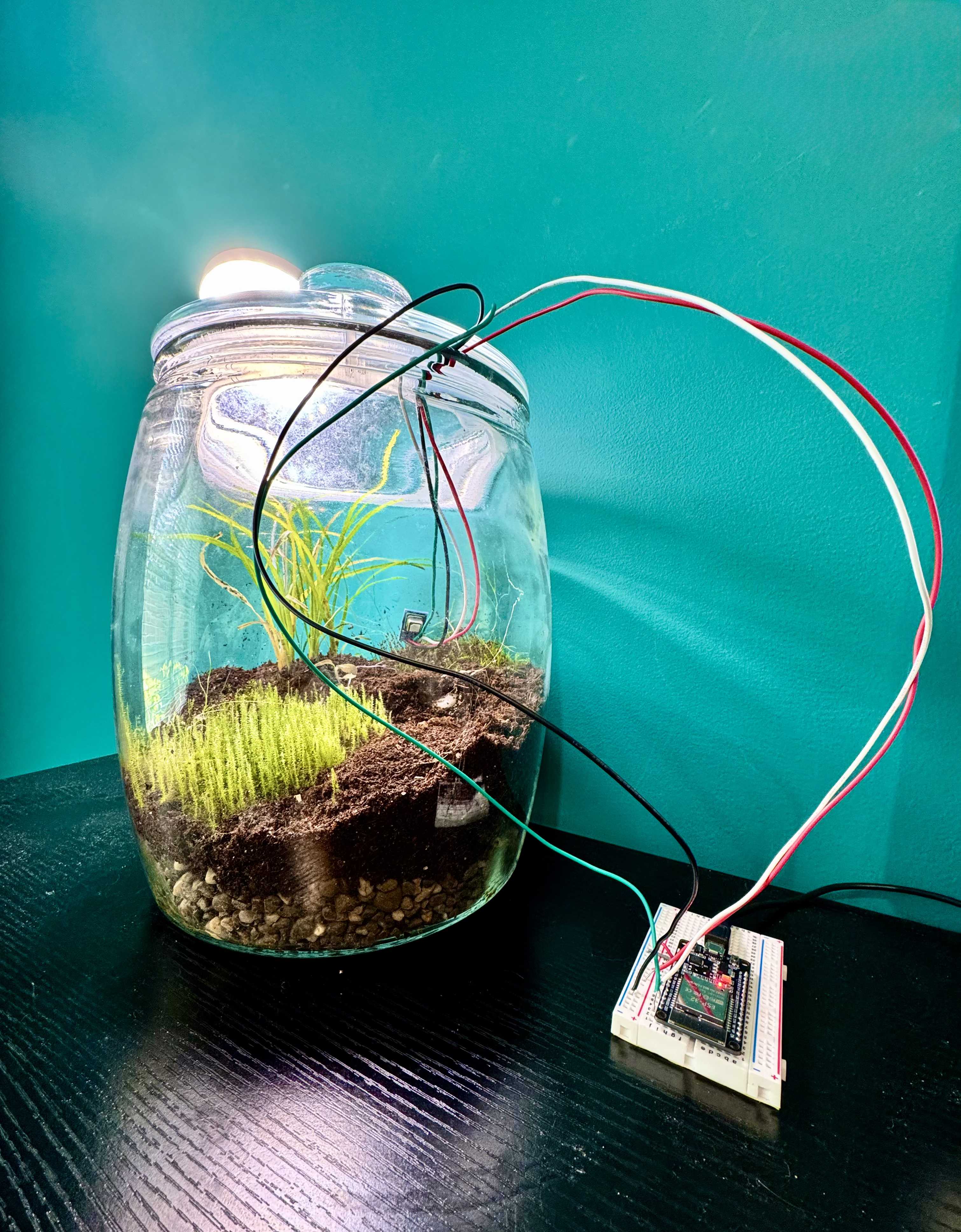

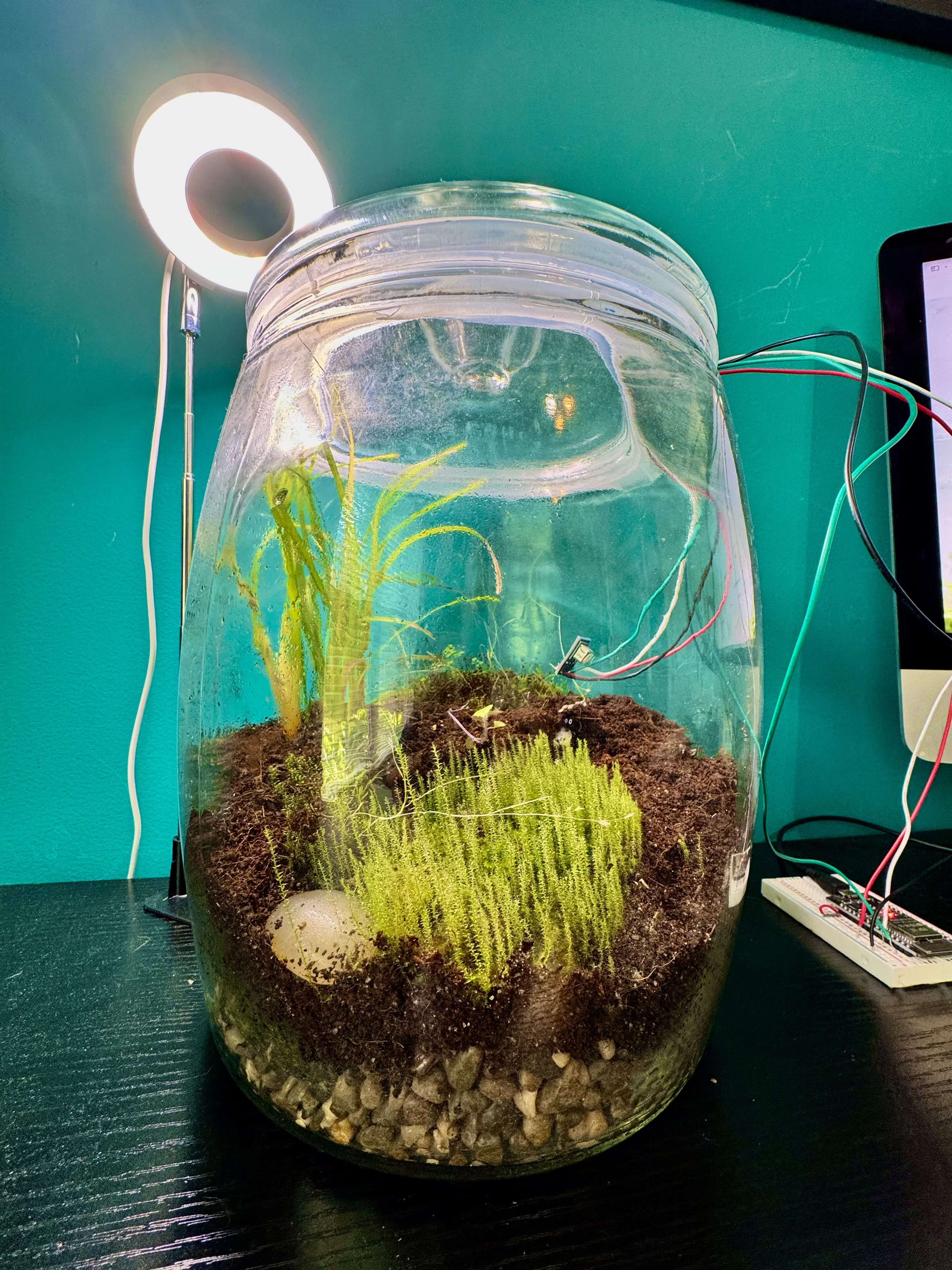
Research paper is now public
The full write-up of the 79-day sealed terrarium experiment, CO₂ Dynamics Under Extended Light Cycles in a Low-Cost Sealed Terrarium, is now available on the site. Headline findings: the 48h dark phase peaked at 2,202 ppm — 2.14× below what a linear extrapolation predicted — and post-treatment CO₂ overshot the baseline to a record low of 1,020 ppm before settling into a new, lower equilibrium. The paper also documents two distinct stable equilibria the system held before and after the Mar 11 intervention, and shows the whole monitoring stack was assembled for ~$50. Read the paper →
Recovery phase complete — CO₂ overshot to record low
After returning to the 16h/8h light cycle on Apr 7, CO₂ didn't just return to the ~1,500 ppm baseline — it dropped to a record low of 1,020 ppm on Apr 10 before slowly climbing back. The extended light period appears to have temporarily boosted the plants' photosynthetic efficiency, causing them to outpace respiration during recovery. CO₂ is now stabilizing around 1,300–1,400 ppm.
Phase 4: Recovery begins — back to 16h/8h
Light cycle returned to the normal 16h on / 8h off schedule. Monitoring how quickly (or whether) the ecosystem returns to its pre-treatment CO₂ baseline of ~1,500 ppm.
Phase 3: 48h dark begins
Light turned off completely at 10 AM to begin the 48-hour dark phase — simulating the lunar night. CO₂ at lights-off was approximately 1,200 ppm after 48h of continuous photosynthesis. Monitoring for the projected rise toward the 5,000 ppm safety abort threshold.
Phase 3: 48h continuous light begins (lunar day test)
The treatment phase starts — grow light left on continuously for 48 hours to simulate a compressed lunar day. Starting CO₂: ~1,500 ppm. Measuring whether extended photosynthesis drives CO₂ lower than normal daytime minimums and how the plants respond to continuous illumination.
Phase 2: Control baseline recording begins
CO₂ has stabilized in the 1,400–1,800 ppm range under the 16h/8h light cycle. Starting 7 days of clean baseline data collection — this becomes the control dataset for comparison with the 48h/48h treatment.
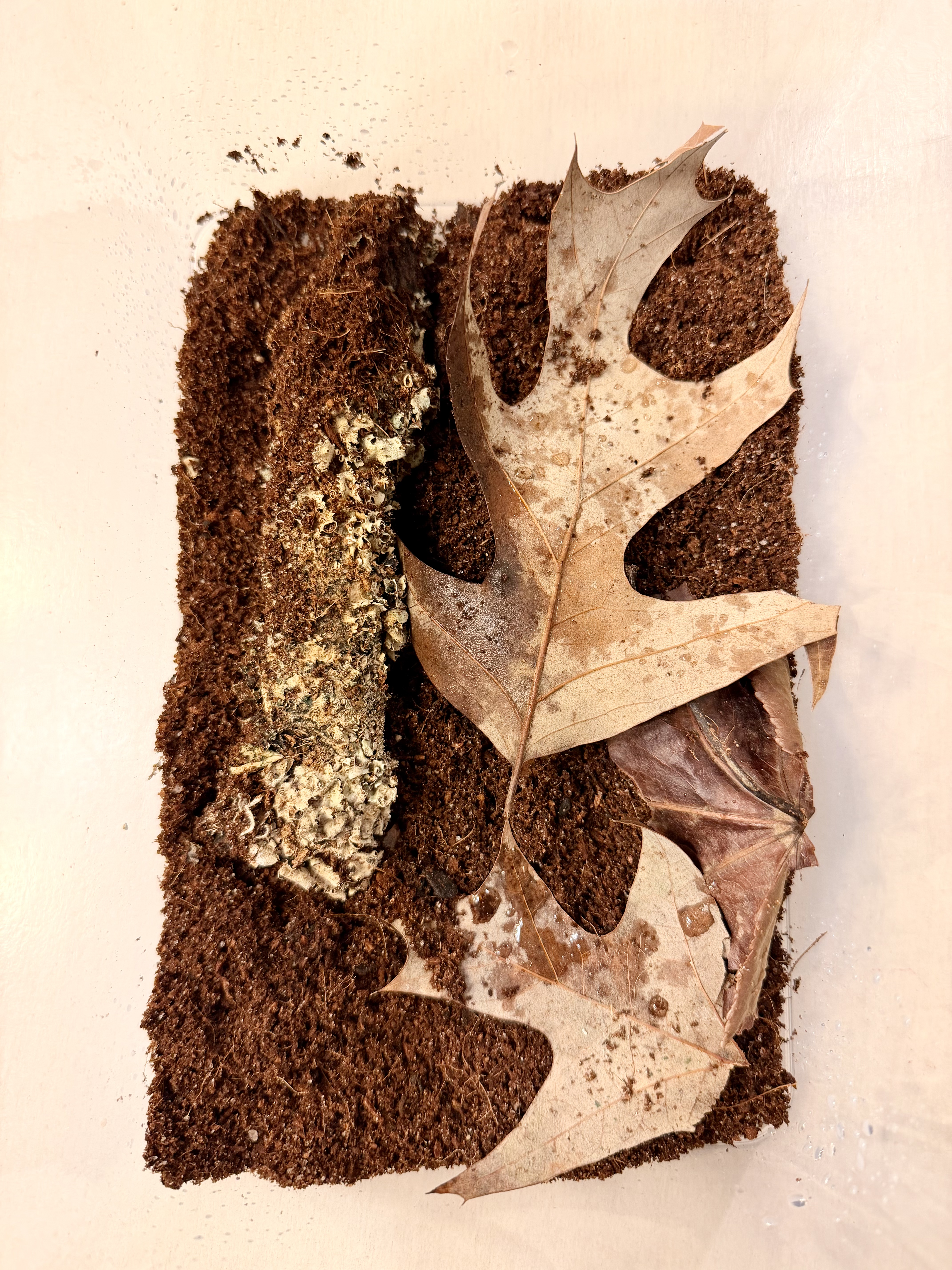
Removed licheny stick & leaf litter to reduce microbial load
CO₂ had stalled around 4,700 ppm — microbial respiration from decomposing organic matter was producing CO₂ nearly as fast as the plants could absorb it through photosynthesis, locking the system in a high-CO₂ equilibrium. To break that equilibrium, I removed the lichen-covered stick and loose leaf litter, eliminating a major fuel source for microbial decomposition and directly reducing CO₂ production. At the same time, the grow light was extended from 12 to 16 hours per day, giving the plants 4 extra hours of photosynthesis while cutting the dark respiration-only period from 12 hours to 8. Together these changes attack both sides of the equation — less CO₂ produced and more CO₂ consumed — which should shift the daily balance toward a net decline of several hundred ppm per day until the system reaches a new, lower equilibrium.
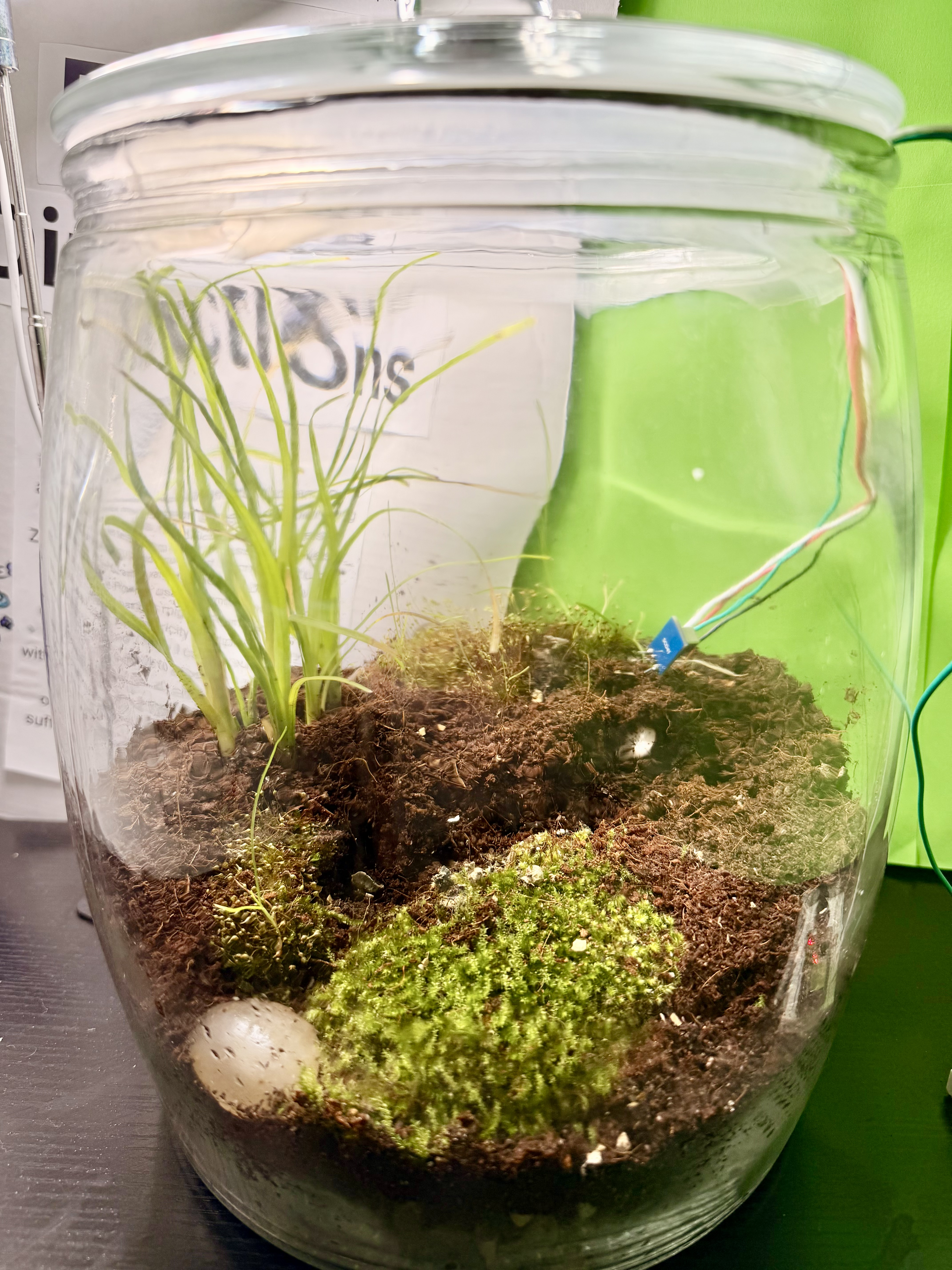
Site is live at terrariumtracker.com
Dashboard publicly accessible via Cloudflare Tunnel with HTTPS. Sensor data, charts, and the observation log available in real time.
Monitoring begins
ESP32 + SCD41 sensor installed and logging CO2, temperature, and humidity every 30 seconds. The terrarium was sealed and data collection started.
Terrarium Setup Timelapse
Full build from empty jar to living ecosystem — substrate layering, moss placement, and introducing the isopods and springtails.